
How to Choose the Right Spiral Chute Material? The Wrong Choice Could Cost You a Fortune!
In gravity concentration, spiral chutes are the workhorses for processing fine-grained ores.
However, many plant owners face a frustrating dilemma: after a period of operation, recovery rates mysteriously drop, and valuable minerals increasingly end up in the tailings.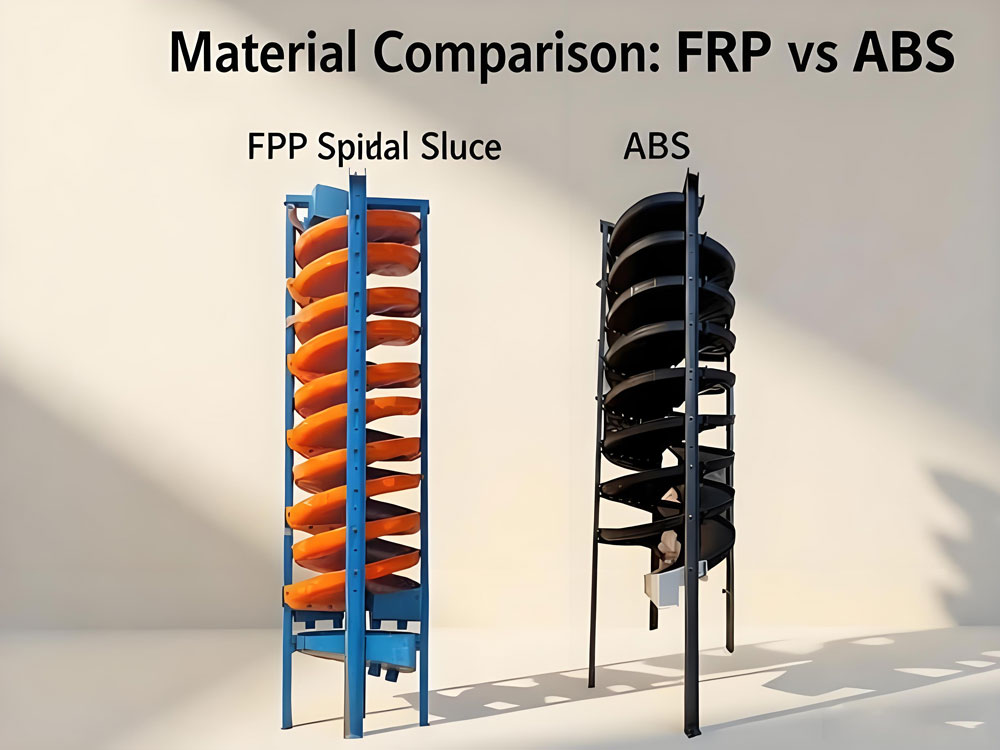
In reality, the culprit is often the choice of equipment material. The two mainstream materials on the market—fiberglass (FRP) and ABS plastic—have vastly different performance characteristics.
Choosing the wrong one doesn't just hurt separation efficiency; it can lead to massive financial losses.
I. The Core Differences: Fiberglass vs. ABS
To avoid costly mistakes, you first need to understand the physical differences between the two.
Fiberglass Spiral Chutes: The Hardcore All-Rounder
Fiberglass Reinforced Plastic (FRP) is currently the top choice in the mining industry.
Its core advantages are exceptional hardness and outstanding wear resistance. Even under the high-speed scouring of ore slurry, the FRP surface remains smooth and flat. This ensures that mineral particles can stratify smoothly by specific gravity, maintaining high recovery rates.
Additionally, FRP boasts extreme resistance to acid and alkali corrosion. It remains stable in highly acidic or alkaline slurry environments, typically lasting 5 to 8 years or even longer.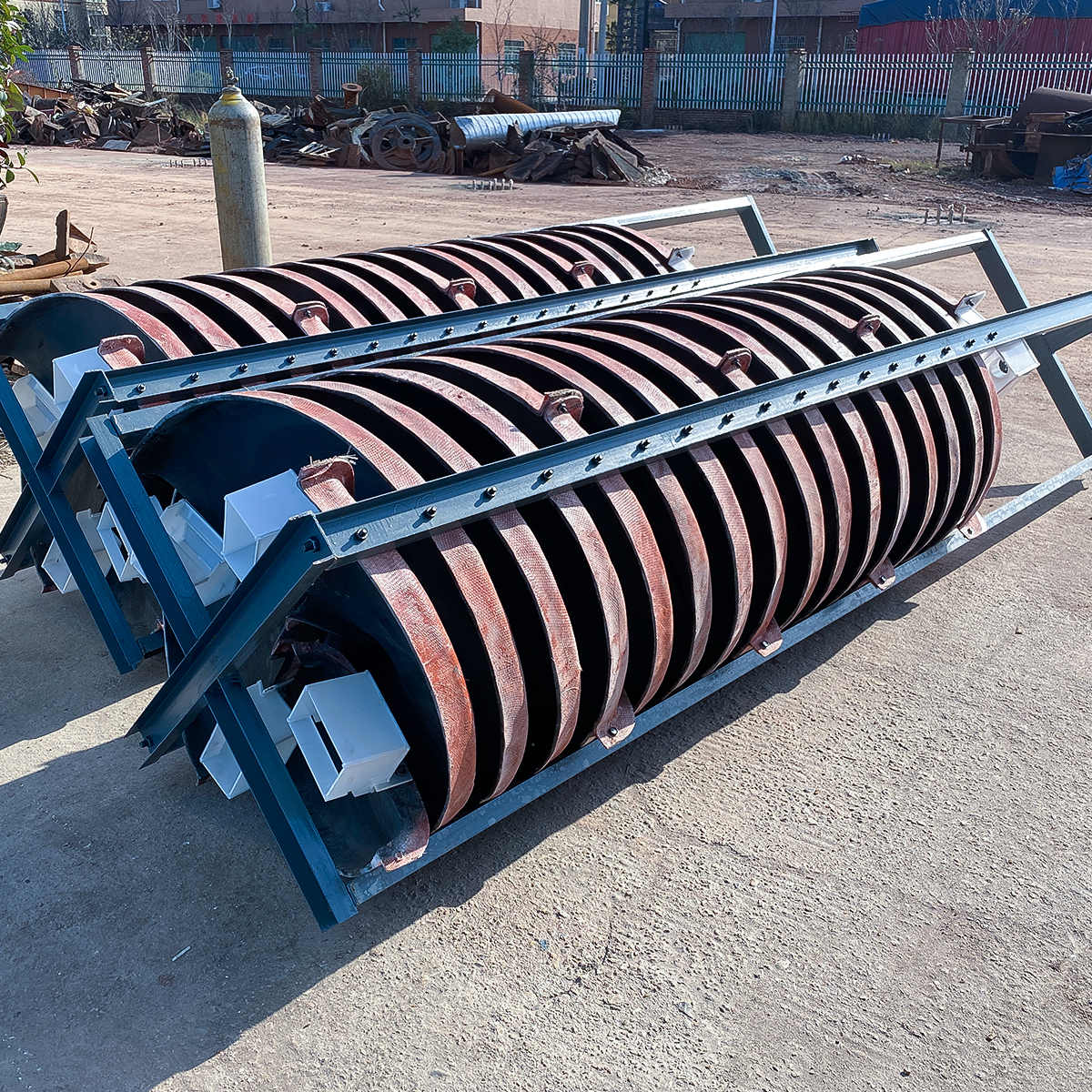
ABS Plastic Chutes: Smooth Surface, but with Fatal Flaws
ABS (Acrylonitrile Butadiene Styrene) is an engineering plastic known for being lightweight, smooth, and impact-resistant, making it easy to handle and install without breaking.
However, as a spiral chute, ABS has glaring shortcomings:
- Poor Wear Resistance: Long-term friction from hard ores quickly makes the chute surface uneven, disrupting the water flow trajectory.
- Poor Weather Resistance: Prolonged exposure to outdoor sunlight causes it to age and become brittle. Under high temperatures or heavy loads, it can easily deform, causing separation precision to plummet.
II. Selection Guide: Tailoring Materials to Your Ore
Choosing the right material is key to maximizing equipment performance. Here are specific recommendations based on ore types:
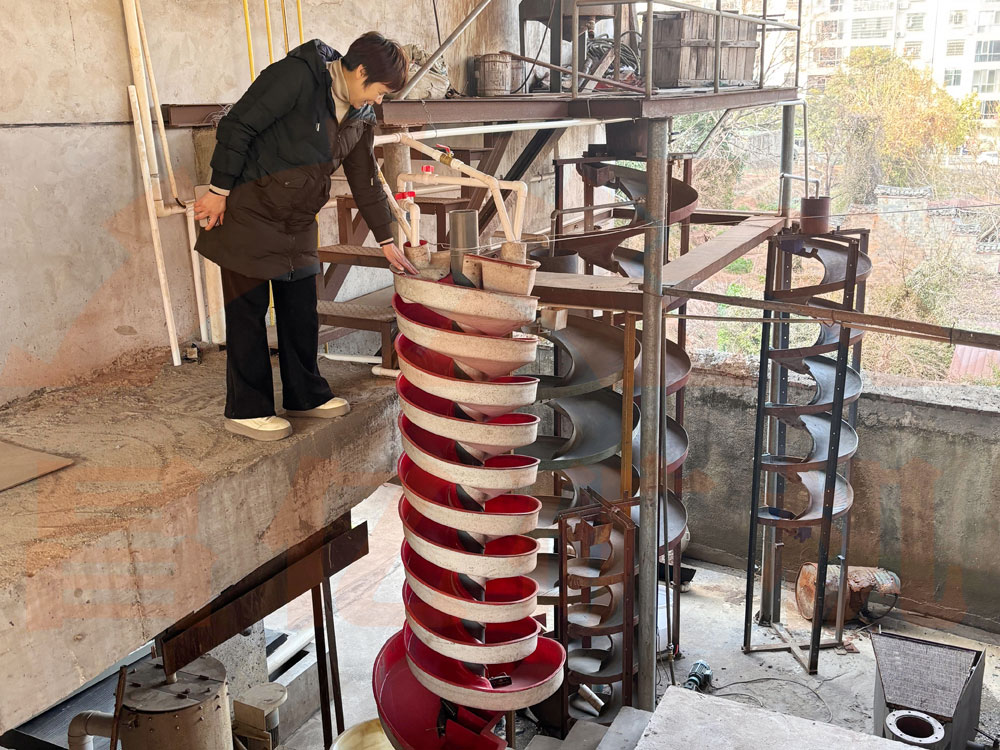
1. Chromite Concentration: Stick with Fiberglass
Chromite is highly dense and hard.
If you use carbon steel or ABS chutes, the blades will quickly wear and corrode, causing recovery rates to drop from over 70% to around 50%.
Therefore, processing chromite absolutely requires wear- and corrosion-resistant fiberglass spiral chutes to ensure long-term, stable, and high recovery rates.
2. Silica Sand & Non-Metallic Ores: Balancing Anti-Corrosion and Lifespan
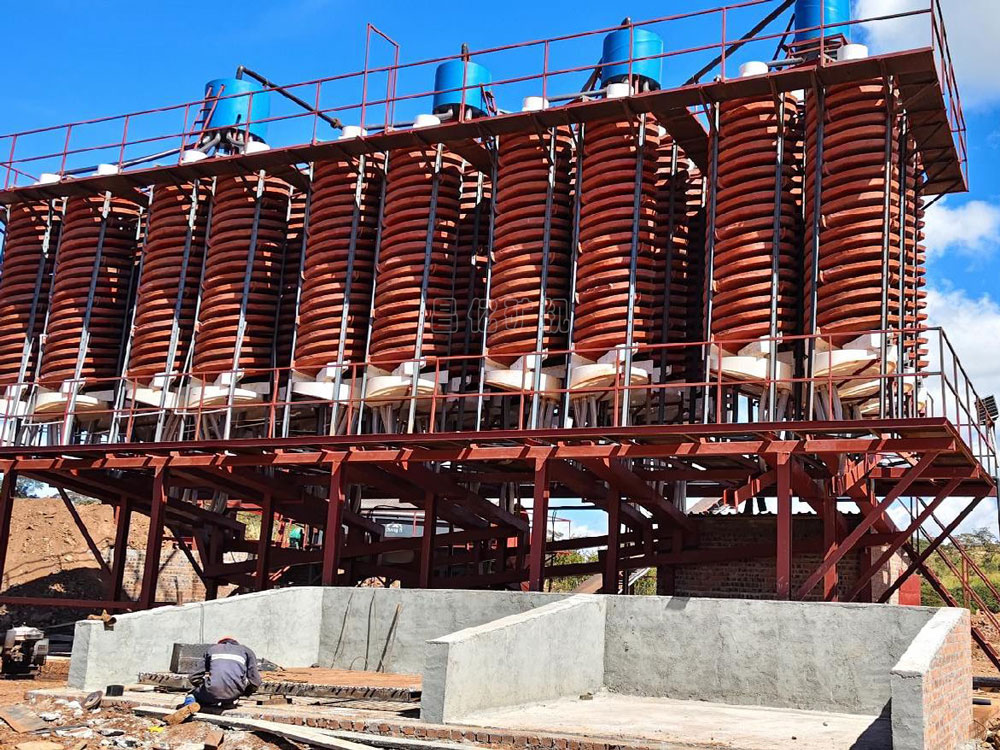
Silica sand processing often involves acid and alkali washing, demanding high corrosion resistance.
Fiberglass not only withstands these harsh chemicals, but its smooth surface also effectively prevents slime from caking, making it ideal for iron removal and purification in silica sand.
3. When to Use ABS Chutes
While ABS performs poorly in heavy mineral concentration, its lightweight nature and low cost make it suitable for short-term indoor projects in non-corrosive environments, or for processing light minerals with very low hardness and specific gravity (such as certain fine coal slime separations).
III. Frequently Asked Questions (FAQ)
Q1: Which lasts longer, fiberglass or ABS spiral chutes?
A: Fiberglass spiral chutes have a significantly longer lifespan than ABS. High-quality fiberglass chutes can last over 5 to 8 years even in harsh conditions. In contrast, ABS chutes are highly susceptible to aging and wear from ore scouring and outdoor exposure, resulting in a much shorter lifespan.
Q2: Why did my spiral chute's recovery rate drop after just a few months?
A: This is likely due to the material lacking wear resistance. If you are using ABS or standard carbon steel, the chute surface becomes rough over time. This disrupts the slurry flow trajectory, preventing heavy minerals from settling effectively and naturally causing recovery rates to plummet.
Q3: I'm on a tight budget. Can I use ABS chutes as a temporary transition?
A: It’s not recommended. Although ABS has a lower upfront cost, the hidden losses from frequent equipment replacements and reduced recovery rates often exceed the price difference of fiberglass chutes within just a few months. In the long run, fiberglass offers the best cost-effectiveness.