Zircon sand (ZrSiO₄) is a critical zirconium-bearing mineral, typically appearing in shades of brown, yellow, or colorless. Known for its exceptional hardness and chemical stability, it serves as a primary feedstock for ceramic glazes, precision casting, refractories, nuclear-grade zirconium, and sponge zirconium production.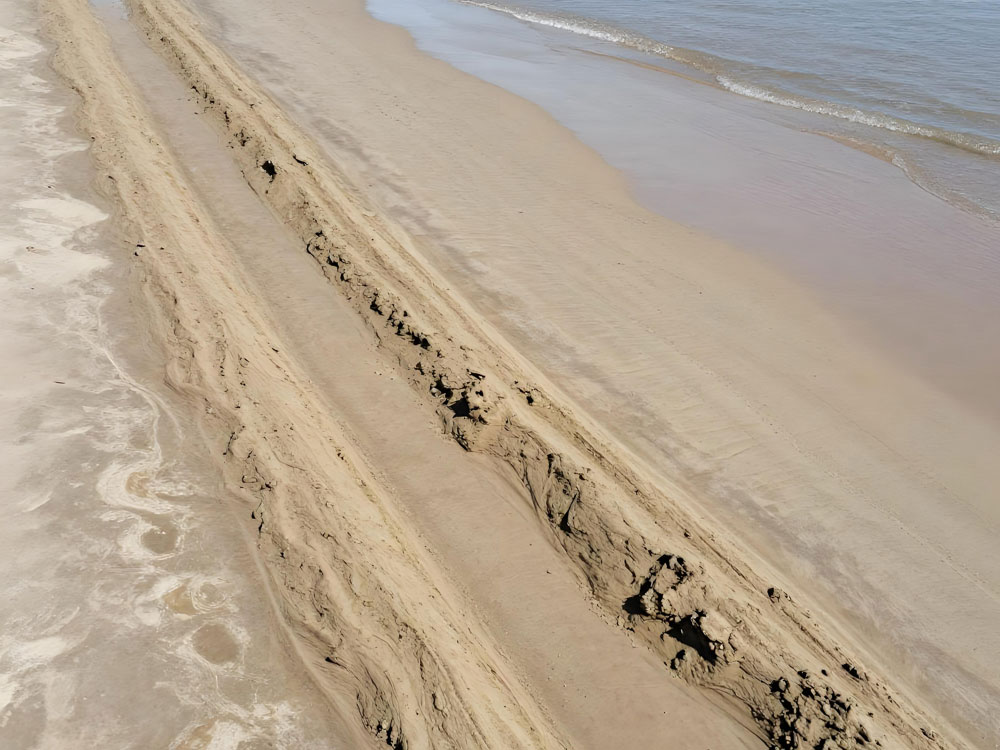
However, high-end industries demand strict quality control. Industrial-grade zircon sand typically requires a Zirconium Dioxide (ZrO₂) content of 65% or higher, with premium grades reaching 66%–67%.
In its natural state, zircon sand is inextricably mixed with quartz, feldspar, ilmenite, magnetite, and monazite. With low ZrO₂ grades and high impurity levels, raw ore is commercially unusable. Only through a professional beneficiation process can it meet the industrial standard of ZrO₂ ≥65%.
Despite its inherent physical stability, selling raw zircon sand is a non-starter for three reasons:
Consequently, beneficiation is not optional—it is the critical link between mining and profitability.
Zircon sand beneficiation isn’t a one-size-fits-all formula. It relies on three fundamental separation principles:
The goal is a systematic approach: progressive purification, multi-stage cleaning, maximized recovery, and guaranteed grade.
Freshly extracted beach or primary sand is laden with mud, rocks, and debris. Clay and slimes are the enemies of efficient separation, disrupting both gravity and magnetic processes.
Thorough desliming is the foundation of a stable operation. Pre-treatment typically employs Rotary Scrubbers combined with high-pressure water scrubbing to strip surface impurities. Integrated screening removes coarse gravel (>2–5mm) that contains no zircon, ensuring only the target fine-grained sand enters the beneficiation circuit.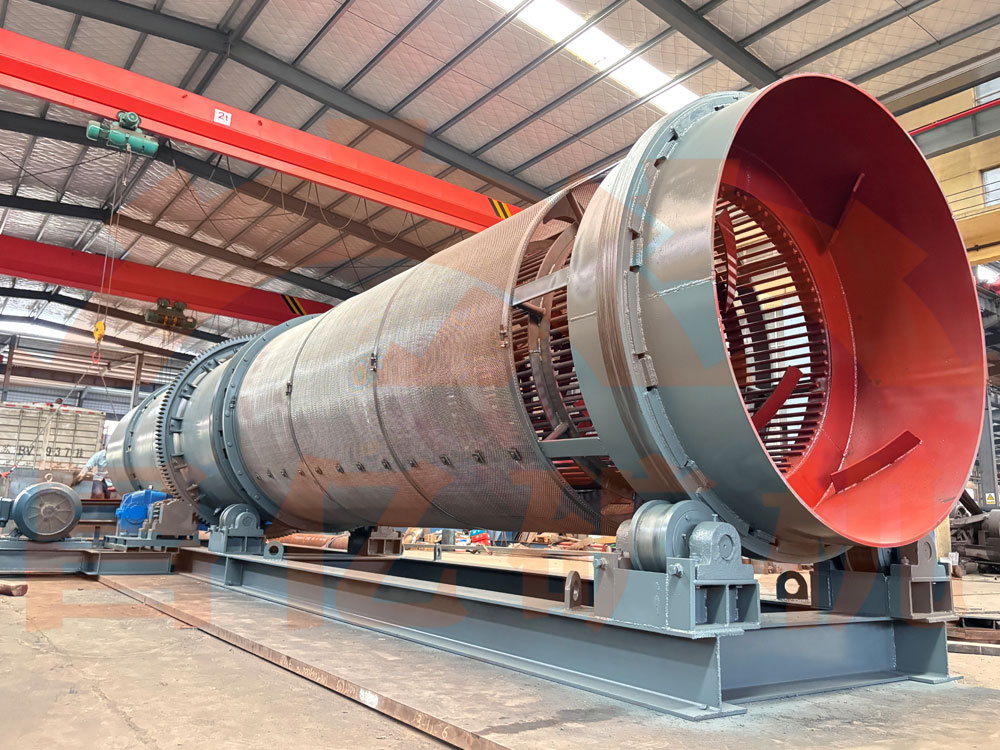
With zircon density at ~4.6–4.7 g/cm³ and quartz at ~2.65 g/cm³, gravity separation is the most cost-effective and reliable primary method.
Spiral chutes are the workhorses of beach sand processing. They handle high volumes without requiring power or chemical reagents. As slurry flows down the spiral, centrifugal and gravitational forces drive heavy minerals to the inner edge while light gangue washes to the outer edge. This stage rapidly discards the bulk of tailings, producing a zircon rough concentrate.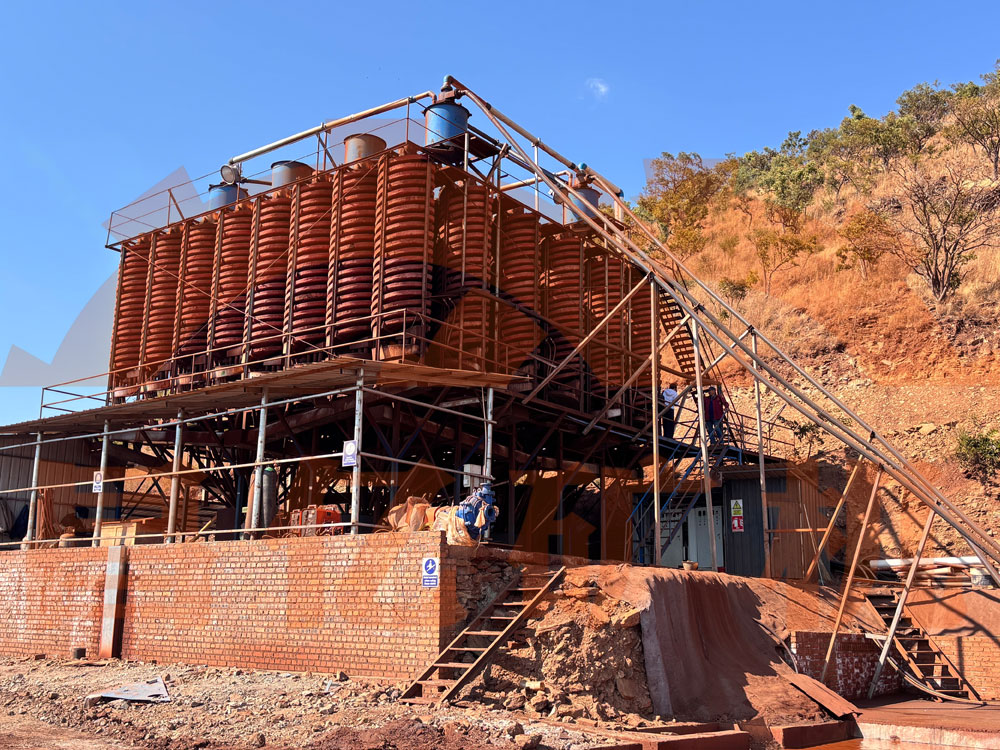
Rough concentrate still contains light gangue and middlings. 6S Shaking Tables provide the necessary precision. Through asymmetric reciprocating motion and cross-flow washing, minerals stratify by density and particle size. Zircon sand concentrates at the high-grade end, achieving the "cleaning" objective of the gravity stage. The shaking table is the cornerstone of zircon gravity separation.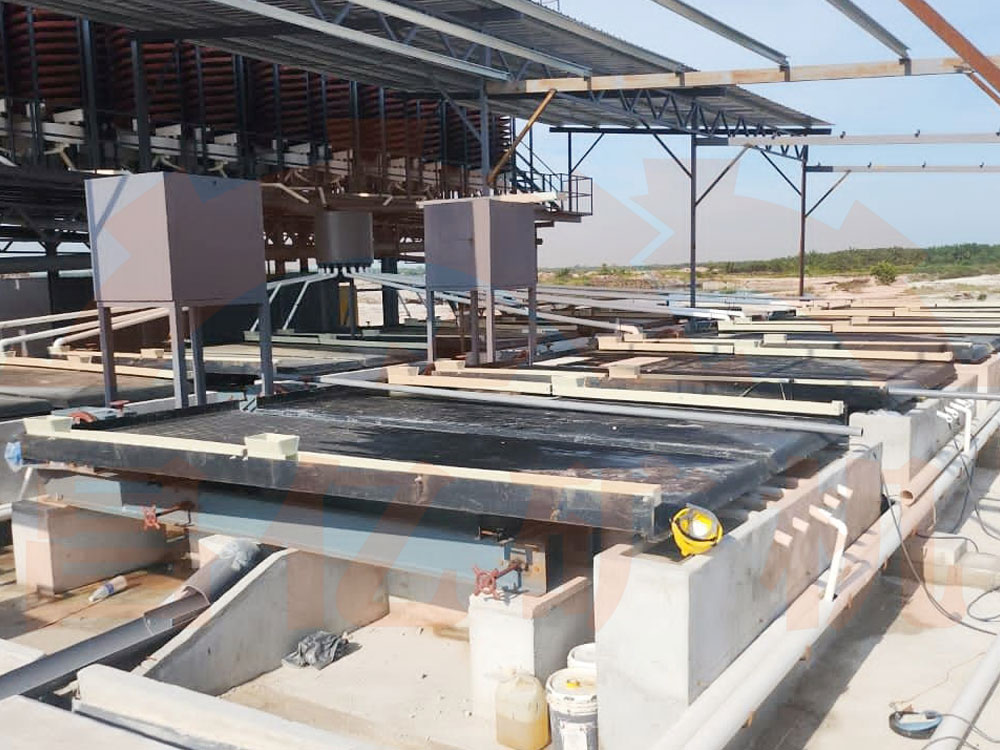
Gravity concentrates often retain magnetic contaminants like magnetite, ilmenite, and hematite. A combined Weak Magnetic + Strong Magnetic circuit is required:
This step significantly boosts concentrate purity and whiteness, preparing the material for electrostatic separation.
After magnetic separation, remaining minerals like zircon, rutile, and garnet have similar densities and are non-magnetic, making further physical separation impossible.
Here, conductivity becomes the key. Rutile is conductive and adheres to the electrode in a high-voltage field. Zircon sand, being a non-conductor, is repelled into the concentrate chute. High-voltage electrostatic separation is the definitive step for achieving ZrO₂ grades consistently above 65%.
For nuclear-grade sponge zirconium or advanced electronic ceramics, physical beneficiation may not suffice. Chemical processes such as acid leaching (HCl to dissolve Fe/Ca oxides) or alkali fusion (to dissolve silicates) are employed to remove trace iron, titanium, and silicon. While costly, this yields ultra-high-purity zircon powder or zirconia for specialized markets.
Purified slurry is thickened and filtered via filter presses. It is then dried to <0.5% moisture content, producing a market-ready, high-purity zircon sand concentrate.
Tailings are managed through closed-loop water circulation and dust control systems to ensure environmental compliance.
A flow sheet is only as good as its execution. Key variables include:
No two ore bodies are identical. Variations in ilmenite, garnet, or clay content mean that beneficiation must be customized. Process design must be based on detailed mineralogical analysis, including particle size distribution, liberation characteristics, and impurity profiles.
Fine-tuning is everything. Minor adjustments to spiral chute feed density and wash water, shaking table stroke/frequency/inclination, or magnetic field intensity can dramatically impact recovery and grade.
Efficiency lies in smart staging. A "roughing-to-discard, cleaning-to-purify" approach balances cost and performance. For instance, using spiral chutes to discard 90% of tailings before sending only 10% of the material to shaking tables drastically reduces equipment footprint and energy consumption compared to an all-shaking-table circuit.
Zircon sand beneficiation is a sophisticated integration of physical and chemical engineering. From washing and screening to gravity enrichment and electrostatic polishing, every stage reflects the expertise of process engineers.
A well-designed process achieves 70%–85% recovery with stable grade compliance. A poor design leads to resource loss and unsellable product. Whether you are commissioning a new plant, sourcing equipment, or optimizing an existing circuit, mastering the zircon sand beneficiation flow sheet is the key to controlling costs, enhancing competitiveness, and ensuring profitability.
Q1: Which equipment is most critical in zircon sand beneficiation?
A: The process is interdependent, but if forced to choose: Spiral chutes and shaking tables are the backbone of recovery in the gravity stage, while the high-voltage electrostatic separator is the gatekeeper of final concentrate grade.
Q2: Why is electrostatic separation necessary?
A: After gravity and magnetic separation, remaining non-magnetic minerals (zircon and rutile) have nearly identical densities, making gravity separation ineffective. However, their conductivity differs significantly, allowing high-voltage electrostatic separation to achieve a clean, high-grade split.
Q3: Does zircon sand beneficiation cause environmental pollution?
A: Traditional gravity, magnetic, and electrostatic separation are physical processes with minimal chemical impact. Primary environmental concerns are wash water and dust. Modern plants mitigate these through closed-loop water recycling and dust suppression systems.
Q4: Is chemical purification required for all zircon sand?
A: No. Chemical purification is reserved for ultra-high-purity applications like nuclear-grade zirconium or advanced electronics. Standard ceramic and foundry grades are fully satisfied by physical beneficiation.
Q5: How can zircon sand recovery rates be improved?
A: Recovery hinges on a logical flow sheet and precise equipment tuning. Most importantly, conduct comprehensive bench-scale and pilot-scale testing to tailor the process to your specific ore mineralogy.
