In the gold mining industry, Carlin-type gold ore is universally recognized as a notoriously difficult deposit to process.
Ask any seasoned metallurgist, and they’ll tell you it’s a real headache.
If you’ve ever run a gold mill, you know that processing conventional gold ore is straightforward. The flowsheets are proven. Recovery rates are stable. Day-to-day operations rarely throw curveballs.
Carlin-type ore, however, is a completely different beast. Its ultra-fine gold dissemination and complex suite of refractory impurities render conventional processing methods useless. Hitting production targets is incredibly difficult.
Whether you’re managing mine operations, selecting equipment, or optimizing a processing plant, mastering three core pillars is non-negotiable: the ore’s unique characteristics, the specialized processing flowsheet, and the right equipment.
This guide will break down the entire Carlin-type processing system from top to bottom. Let’s get into it.
When processing Carlin-type ore, the worst thing you can do is blindly copy a conventional gold mill’s flowsheet.
To achieve strong recoveries, you first need to understand the ore’s true characteristics and its specific metallurgical bottlenecks.
Why do many new mines and small-scale plants suffer from low recoveries, subpar concentrate grades, and excessive equipment wear? Simple: they failed to tailor their process to the ore’s unique quirks. You can’t just run blind and expect good results.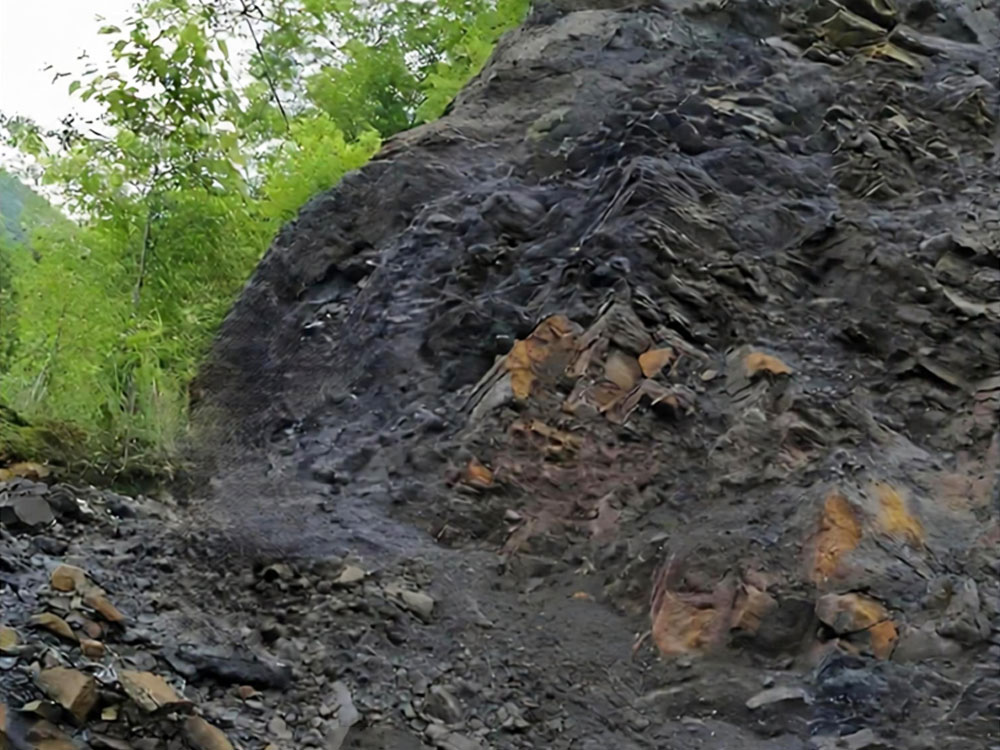
First discovered in Carlin, Nevada, in the 1960s, Carlin-type ore is essentially a micro-disseminated gold deposit.
The fundamental reason it’s so hard to process? The microscopic size of the gold.
In conventional ores, gold particles are often visible to the naked eye. They are concentrated and easy to separate. In Carlin-type ore, the gold is micron-sized. It is uniformly dispersed throughout the host rock. It’s completely invisible to the naked eye and impossible to separate using basic equipment.
Furthermore, the ore chemistry is highly complex. It naturally contains interfering impurities like arsenic, mercury, carbon, and sulfur. These contaminants tightly encapsulate the gold particles. They form a dense physical barrier that locks the gold inside the mineral matrix.
Why is Carlin-type ore so much harder to process than conventional gold ore? It boils down to three main challenges:
Stack these issues on top of each other, and the processing flowsheet becomes highly complex. It requires precise equipment and tight control over process parameters.
After decades of metallurgical advancement, the industry standard for treating Carlin-type ore is a staged, closed-loop flowsheet: Pretreatment → Mineral Enrichment → Impurity Destruction → Final Gold Extraction.
This step-by-step approach systematically tackles each metallurgical hurdle. It maximizes overall gold recovery.
Every stage in this plant is highly interdependent. A slight parameter drift or operational slip in one circuit will cascade down the line. This drags down overall recovery and profitability.
Crushing and grinding are the first line of defense. The goal is purely mechanical: break apart the dense rock structure, strip away the host rock, and expose as much fine gold as possible. This prepares the ore for flotation and leaching.
Mine crushing always follows the golden rule: "More crushing, less grinding."
Raw ore is first reduced to a medium size by a primary crusher. Then, it is progressively refined through secondary and tertiary crushers. A common rookie mistake is over-crushing.
Pretreatment crushing only needs to ensure uniform particle size and eliminate massive boulders. Standardized crushing reduces the load on grinding equipment and boosts overall plant efficiency.
Uneven feed sizes cause uneven grinding. This leads to poor flotation separation and incomplete leaching.
Grinding is the core of pretreatment. It directly affects gold liberation.
For Carlin-type ore, the industry standard is clear: grind until 80% to 85% of the slurry passes through a 75-micron screen. This range has been proven to liberate encapsulated micro-fine gold without causing severe over-grinding.
Why does this matter? Over-grinding creates ultra-fine slime. Slime is highly adsorbent. It consumes excess reagents and clogs equipment, severely reducing plant efficiency. Precision is key.
Flotation is the primary method for enriching Carlin-type ore. It’s widely used and highly cost-effective.
Uniform slurry is pumped into flotation cells. Regulators, collectors, and frothers are added sequentially. Micro-bubbles attach to the gold-bearing minerals, separating them from the useless gangue.
The industry standard is a closed-circuit "one roughing, two cleaning, two scavenging" process. Auxiliary reagents, like copper sulfate, optimize the slurry environment. This significantly boosts both concentrate grade and recovery.
This step upgrades low-grade raw ore into high-grade concentrate. It reduces the volume of material sent to downstream processing, keeping costs in check.
Pre-oxidation is the biggest difference between Carlin-type and conventional processing. It is the absolute key to treating high-impurity refractory ores.
Flotation alone cannot clean up arsenic, sulfur, or carbon. Pre-oxidation breaks down the encapsulating barrier.
There are three mainstream technologies: roasting, pressure oxidation (POX), and bio-oxidation (BIOX). Each has its own advantages.
Roasting is highly efficient and suits large-scale continuous operations. BIOX skips high-temperature roasting, drastically reducing emissions. It’s perfect for mines facing strict environmental regulations.
Whichever method you choose, it weakens the impurities' hold on the gold. It exposes the deeply buried micro-fine gold, clearing the path for cyanide leaching.
After pretreatment, flotation, and pre-oxidation, it’s time for the core extraction step: cyanide leaching.
The activated gold concentrate is mixed into a standard slurry. Cyanide reagents are added precisely. Continuous agitation ensures the chemicals fully react with the exposed gold, converting solid gold into a water-soluble liquid complex.
Next, activated carbon adsorption and zinc cementation pull the gold out of the solution. The result is high-purity gold sludge.
Years of optimization have pushed comprehensive recovery rates past 82%. It’s currently the best balance of efficiency, cost, and stability.
A top-tier process needs the right equipment to shine.
Equipment selection directly impacts recovery rates and energy consumption. A highly compatible equipment suite leverages process advantages, reduces wear, and boosts efficiency.
Here is a standardized equipment checklist based on the full flowsheet.
Carlin-type ore is hard, dense, and abrasive. Equipment must be built to take a beating.
Jaw crushers and cone crushers handle primary and secondary crushing. They are robust, high-capacity, and reliable for continuous mining operations.
Ball mills paired with classifiers form a closed-loop grinding circuit. They precisely control particle size. This prevents under-grinding (poor liberation) and over-grinding (excess slime).
Flotation equipment must capture micro-fine gold.
Pneumatic and micro-bubble flotation machines are the industry standard. Micro-bubble machines are particularly ideal. They generate massive amounts of fine, uniform bubbles. This maximizes surface area and adhesion stability.
They capture ultra-fine gold that would otherwise be lost in the tailings. Built-in agitation ensures optimal reagent mixing, steadily boosting enrichment efficiency.
These facilities guarantee product quality and regulatory compliance.
Vertical leaching tanks use high-power agitation to ensure complete reagent contact. This eliminates dead zones and maximizes extraction.
Activated carbon columns and zinc precipitation cells handle final purification.
Finally, filters and tailings dewatering equipment separate solids from liquids. This produces a clean concentrate and ensures tailings can be safely and compliantly stored.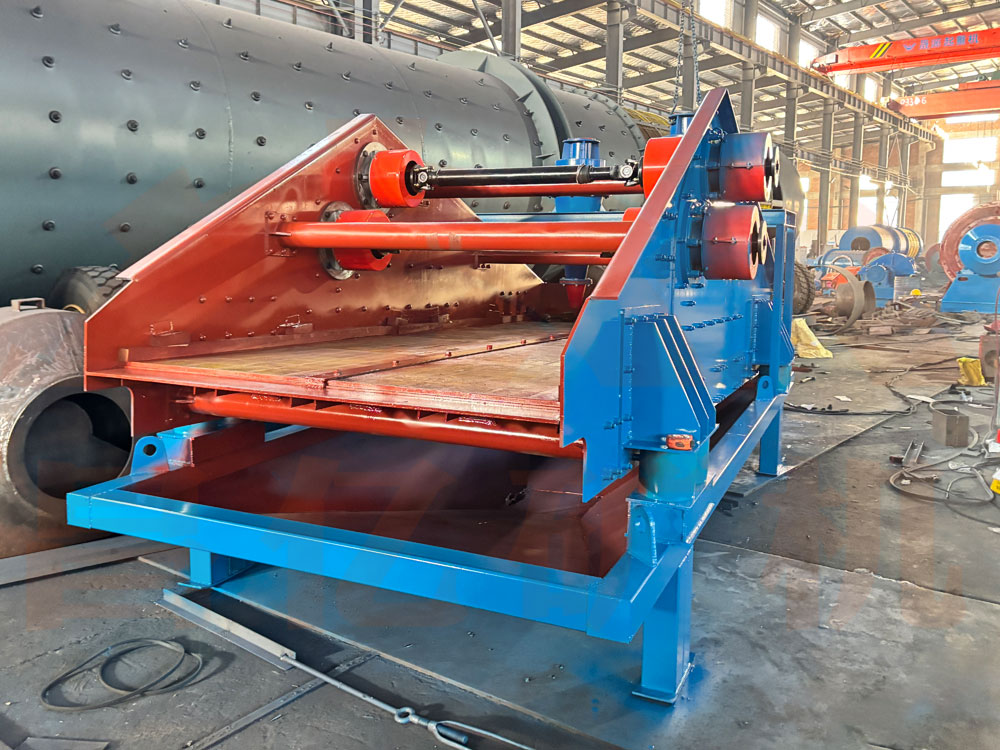
Many plants have the right flowsheet and equipment, yet still miss industry-leading recovery targets.
The problem usually isn't hardware. It’s poor daily operational control.
First, nail your grinding size. Adjust parameters based on ore hardness and impurity levels. Keep slime generation to an absolute minimum.
Second, optimize your reagent dosing. Over-dosing wastes money and causes environmental issues. Under-dosing kills recovery. Precision is everything.
Finally, commit to the combined flowsheet: Flotation + Pre-oxidation + Cyanidation. For high-arsenic or high-carbon ores, tweak the pre-oxidation residence time. Weakening the impurity barrier will steadily push your recovery rate higher.
Carlin-type ore is the ultimate micro-fine, high-impurity challenge. The core hurdles are poor liberation and severe impurity interference.
The standardized closed-loop flowsheet solves these issues step-by-step. Pair this with specialized equipment like micro-bubble flotation cells and vertical leaching tanks. Fine-tune your parameters to match the specific ore body.
For mining companies, this is the proven formula. Tailored processes, the right equipment, and tight operational control are the only ways to maximize recovery, cut costs, and drive profitability.
Q1: Why can’t I use a conventional gold ore process for Carlin-type ore?
Conventional ores have coarse gold and few impurities. Simple crushing and flotation work fine. Carlin-type ore has microscopic gold locked inside arsenic and carbon. Conventional methods lack the liberation and destruction capabilities needed. You’ll lose gold and fail to hit production targets. You need specialized pre-oxidation and micro-flotation.
Q2: What are the most critical pieces of equipment?
Three circuits dictate your success. Micro-bubble flotation machines drive enrichment. Pre-oxidation reactors destroy the refractory barrier. Leaching tanks ensure complete chemical reaction. If any of these fail, your entire plant suffers.
Q3: How do I improve gold recovery?
Focus on three things. First, optimize grinding to maximize gold liberation. Second, tailor your pre-oxidation and reagent dosing to your specific ore chemistry. Third, add a tailings reprocessing circuit to catch any escaped micro-fine gold.
Q4: Is Carlin-type processing environmentally friendly?
Traditional roasting creates toxic emissions and is falling out of favor. Modern plants use BIOX or POX. Paired with closed-loop reagent recovery and wastewater treatment, these methods drastically cut emissions and easily meet modern green mining standards.
Q5: Is it worth processing low-grade Carlin-type ore?
Absolutely. Low-grade ore has little value on its own. But mature flotation concentrates that dispersed gold into a high-grade product. Combined with optimized flowsheets, you can maintain strong recoveries. It turns idle, low-grade resources into highly profitable, long-term assets.
